Spaghetti Carbonara — Authentic Roman Recipe
If you think carbonara has cream, you've never tasted the real thing. This is how it's made in Rome — simple ingredients, perfect technique, pure magic on a plate. Ready in 25 minutes. 🍝✨
💡 Why This Is The Only Carbonara You'll Ever Need
- ✅ Truly authentic — zero cream. The sauce thickens naturally from eggs + cheese + pasta water
- ✅ Deep savory flavor — guanciale = rich cured pork depth, far better than bacon or pancetta
- ✅ Texture perfection — silky, glossy, clinging sauce that never clumps or separates when done right
- ✅ Fast weeknight meal — 25 minutes total, no fancy tools, straightforward steps
- ✅ Respectful of tradition — true Roman method passed down, not a cream-heavy imposter
- ✅ Impressively simple — guests can't believe how luxurious it tastes with so few ingredients
📖 The True Story
Carbonara is one of Rome's most celebrated dishes — and also one of the most misunderstood outside Italy. The name likely comes from the charcoal burners ("carbonari") who ate this hearty, portable meal over open fires in the Apennine mountains; the abundant black pepper looked like scattered charcoal. By the mid-20th century it had become a staple in Roman trattorias. The defining rule? No cream belongs in carbonara. The sauce's luxurious silkiness comes entirely from emulsifying eggs, freshly grated Pecorino Romano, and the starchy cooking water released by the pasta. Add cream and you change the dish entirely. Trust the process — it works beautifully.
📝 Ingredients
The Essentials — Quality Matters Most
- 400g spaghetti — or rigatoni, bucatini, or tonnarelli. Long strands catch sauce beautifully; shapes hold it in ridges. Italian-dried semolina pasta is best.
- 150g guanciale — cured pork cheek, trimmed of hard rind, cut into thin strips. This is the authentic choice. Pancetta is the closest substitute; bacon is smoky and changes the flavor profile.
- 4 large egg yolks + 1 whole egg — room temperature works best to prevent shocking when meeting hot pasta.
- 80g Pecorino Romano — strictly freshly grated. Pre-grated cheese has anti-caking agents that ruin the sauce. Parmesan alone is too mild — mix half-and-half if you must, but Pecorino is traditional.
- Freshly ground black pepper — coarse grind, generous amount. It's not just seasoning, it's a signature flavor.
- Salt — only for the pasta water. Guanciale and Pecorino are already salty.

👨🍳 Step-by-Step Instructions
- Boil water — salt generously. Bring a large pot (4–6 litres) of water to a rolling boil. Add salt until it tastes like seawater — this is your only chance to season the pasta itself. Add spaghetti and cook to al dente — usually 1–2 minutes less than package instructions, as it will cook further in the pan. Before draining, scoop out and reserve 1 cup of cloudy, starchy cooking water. This is your magic ingredient. Drain pasta — never rinse it! The starch is what binds the sauce.
- Crisp the guanciale — low and slow. While the water heats and pasta cooks, place guanciale strips in a cold, dry skillet — no oil needed. Turn heat to medium. The fat will slowly render out over 8–10 minutes. Cook until golden at the edges but still tender in the middle — crisp, not burnt. If it browns too fast, lower the heat.
- Whisk the sauce base — smooth & thick. In a medium bowl, combine the 4 yolks, 1 whole egg, all the grated Pecorino Romano, and a generous amount of coarsely ground black pepper. Whisk vigorously until you have a thick, pale golden paste — about 45 seconds. Set aside. Do not add salt — the cheese and guanciale provide plenty.
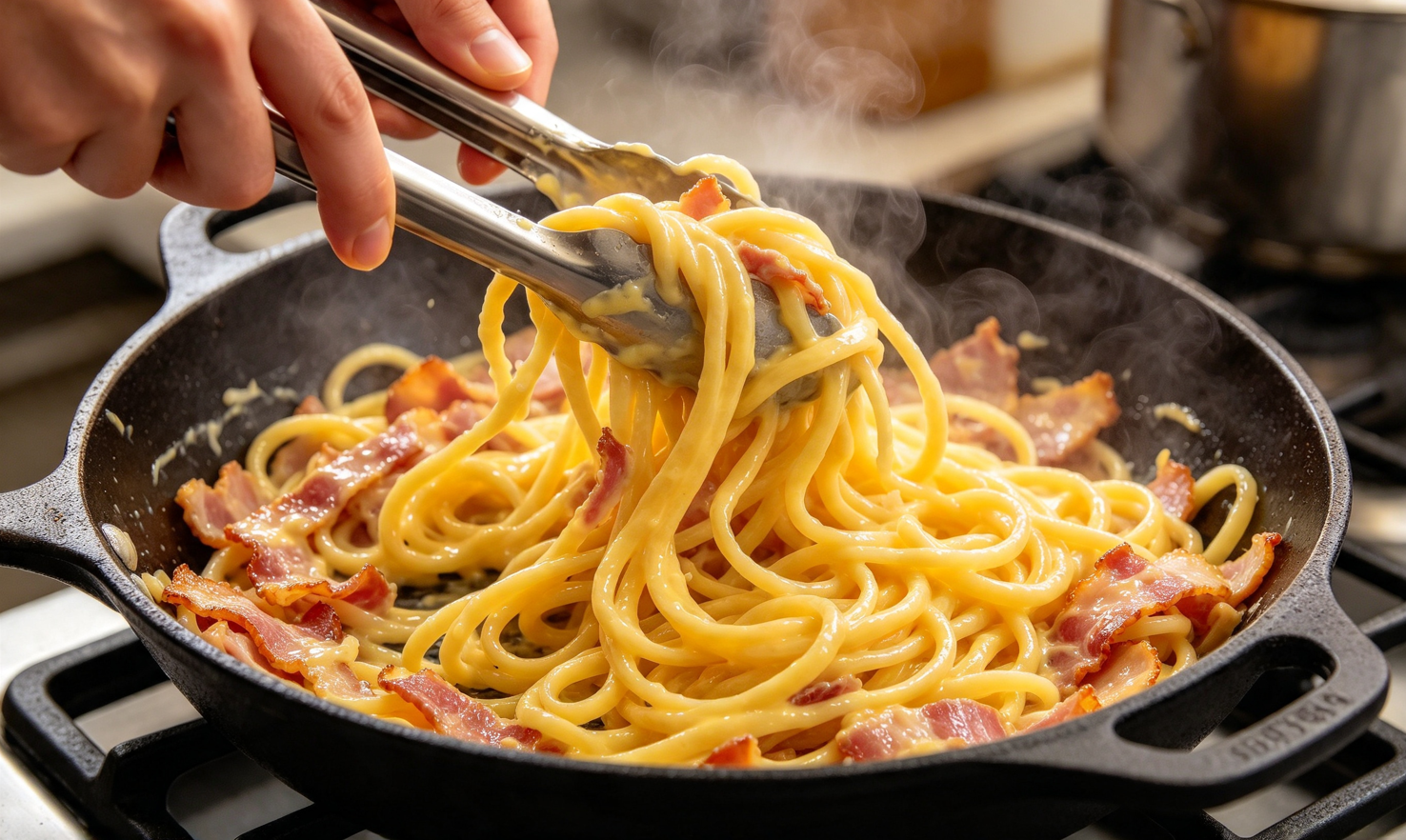
- Combine — OFF THE HEAT. This is the most critical step. Remove the skillet from the burner completely. Wait 30 seconds for the pan to cool slightly. Add the hot drained pasta directly into the skillet with the guanciale and its rendered fat. Toss with tongs to coat every strand in golden fat.
- Make the sauce — emulsify fast! Pour the egg-cheese mixture over the pasta. Toss immediately and continuously with tongs. Add the reserved pasta water one splash at a time — 2–3 tablespoons per addition — tossing all the while. The starch in the water emulsifies with the eggs and cheese, creating a rich, glossy, creamy sauce that clings to every strand. Stop when the texture is luxuriously silky — you may not need all the water.
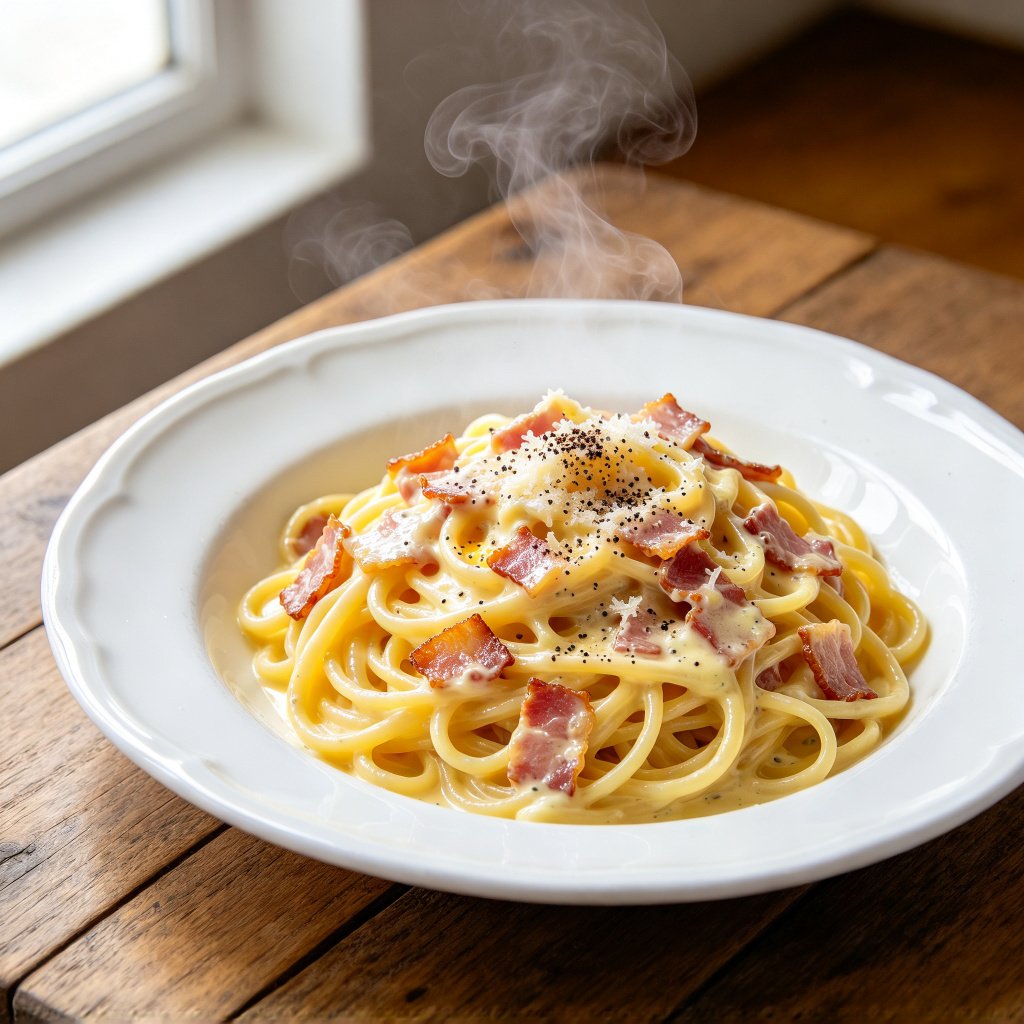
- Serve immediately — carbonara waits for no one. Plate onto pre-warmed dishes — this slows the sauce thickening slightly. Top with extra freshly grated Pecorino Romano and a final generous crack of black pepper. Eat right away — within 2–3 minutes. As it sits, the sauce continues to thicken and may separate. Freshly made is unbeatable. Buon appetito! 🍝✨



📊 Nutrition (per serving)
Values approximate — based on guanciale & Pecorino as listed.
❓ Frequently Asked Questions
Why no cream? Everyone uses it!
Cream is not traditional — it's a modern invention born outside Italy to simplify the technique. Real Roman carbonara relies on emulsification: eggs + cheese + starchy water create a naturally silky sauce that's lighter, more flavorful, and far more elegant than anything with cream. Once you taste the authentic version, you'll never go back.
What is guanciale and can I substitute it?
Guanciale is cured pork cheek — tender, rich, deeply savory with milder fat than bacon. It's the traditional choice. If unavailable, use pancetta (cured belly, not smoked). Bacon is smoked and will alter the flavor profile significantly — it works, but it's not authentic.
My eggs scrambled — what did I do wrong?
Usually one of three things: the pan was too hot, you added the egg mixture too slowly without tossing, or the pasta wasn't hot enough to emulsify but cool enough not to cook the eggs solid. Always remove the pan from heat first, toss immediately, and work quickly.
Can I use Parmesan instead of Pecorino Romano?
Pecorino is sheep's milk cheese — sharper, saltier, and creamier when melted. Parmesan (cow's milk) is milder and nuttier. Purists insist on 100% Pecorino, but a 50/50 blend works well if you find Pecorino too intense. Do not use pre-grated cheese of any kind — it will ruin the sauce texture.
Why is my sauce thick or clumpy by the time I sit down to eat?
The egg-cheese sauce naturally tightens as it cools — this is normal and unavoidable. Serve on warm plates, eat immediately, and don't let it sit. Adding a tiny splash of hot pasta water right before eating loosens it back up if needed.
🔄 Authentic Twists
- 🍝 Rigatoni Carbonara: Use ridged tubes instead of spaghetti — they catch and hold the sauce beautifully. Many Romans actually prefer this shape!
- 🥚 Golden Yolk Rich: For extra-luxurious silkiness, use 6 yolks + 1 whole egg instead of the standard ratio — richer color, creamier texture, more decadent.
- 🧀 Half & Half: Can't find Pecorino Romano? Use 40g Pecorino + 40g Parmigiano-Reggiano. Not strictly traditional, but delicious and closer than using either alone.
- 🌶️ Pepe e Carbonara: Double the black pepper and add a pinch of crushed red pepper flakes to the guanciale as it crisps — subtle warmth that elevates every bite.
- 🍄 Funghi Carbonara: Sauté sliced mushrooms in the rendered guanciale fat until golden before adding the pasta — earthy richness that complements the pork beautifully.
- 🧄 Garlic Optional: Traditional carbonara has NO garlic — but if you love it, gently sauté 1 crushed clove in the guanciale fat, then remove it before adding pasta. Faint background note only.
💡 Chef's Secrets for Perfect Carbonara
- Reserve water FIRST. Don't wait until after draining — it slips your mind! Scoop that cloudy cup out before the pasta goes down the drain.
- Room temp eggs help. Cold eggs hitting hot pasta = higher risk of scrambling. Take them out 30 minutes early, or rest in warm water 5 minutes if you're in a rush.
- Grate cheese yourself. This is non-negotiable. Pre-grated cheese is coated in anti-caking powder that prevents a smooth emulsion. A fresh block + box grater = perfect sauce.
- Pan OFF heat. Even residual heat from a burner turned off can be too much. Move it to a cool spot on the stovetop before adding eggs — that 30-second pause makes all the difference.
- Tongs > spoon. Long strands need lifting and folding, not stirring. Tongs coat every strand evenly without breaking pasta or scrambling sauce.
- Warm plates matter. Cold plates shock the sauce and make it seize instantly. 1 minute in a warm oven or hot water bath = silky sauce that stays perfect longer.
🍷 Serving & Pairing
Carbonara is rich, savory, and deeply satisfying — it doesn't need heavy sides. A crisp green salad tossed in lemon and olive oil cuts through the richness perfectly. Or serve with a simple loaf of crusty Italian bread to mop up any remaining sauce. For drinks: a crisp, dry white wine like Frascati, Pinot Grigio, or Verdicchio is classic in Rome. A light-bodied red like Chianti Classico or Montepulciano also pairs beautifully. Avoid heavy oaked wines — they clash with the delicate egg-and-cheese sauce. And finally: eat together, family-style, straight from the pan if you like. Carbonara is meant to be shared and savored immediately. Buon appetito! 🍝✨